Showing posts with label explanation. Show all posts

Tuesday, 9 August 2016

All about tsunamis, By Sophie


All about tsunamis

What a tsunami is

Do you know what a tsunami is? Tsunami is a japanese word that means "Harbour wave". Tsunamis are big waves that cause destruction. Not only that, it also sweeps out the debris after it comes in which makes it worse. It can kill up to thousands of people every time it happens.

The cause and process of a Tsunami

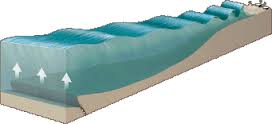
A tsunami is caused by many reasons, but all of them make sudden movement of the ocean floor. Most tsunamis are caused by underwater earthquakes. An underwater earthquake is caused when the tectonic plates of the earth surface slip, making and releasing a massive amount of energy.

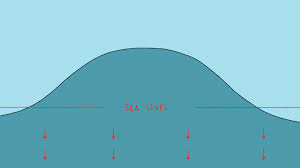
The energy carries up to the surface, moving the water and raising it above the normal sea level. But it's not that simple. Gravity then pulls it down so the water will ripple outwards. A tsunami is made from all of this.

The tsunami will gradually slow down and increase height when it approaches land. Once it reaches land, then it will start its destruction. A tsunami goes as far as 16 kilometres in. After it goes in, the water will sweep back out to the ocean/sea, dragging everything that has been caught in its path.

What happens in a tsunami and how to keep safe

It can kill many people, right? Nobody wants to be killed, right? So we must know how to protect ourselves when a tsunami is coming. The reason the japanese called tsunamis "harbor waves" is because you can only see a tsunami when it is close to the shore. That also make it hard to detect a tsunami quicker.

But before it comes in, the tide will retreat further than usual. You can watch for that to know whether a tsunami is coming. If there is an earthquake that is shaking severely/makes it hard to stand up, that could mean a tsunami is approaching. If the water is moving strangely of making odd sounds, that is also another sign for a tsunami coming.


When a tsunami occurs, get to higher ground or as far away from the coast immediately. That way, you might avoid getting swallowed by the water. If it is too late, go on the roof/higher level of a tall building or hold on to a tree or a floating object. Boats are usually safest in waters taller than 20 metres. Be cautious that there could be over one wave and they could be bigger, stronger and more destructive.

Remember that the water will soon go back out to the sea/ocean. Try to not stray from your spot until you are positive that the tsunami is over. Otherwise, you could be swept out to sea with the retreating water.

It will take a long time to restore everything back to normal. Houses, cars, apartments, buildings, power lines; they all could be damaged. Be careful of what water you drink, it could be contaminated. Thousands of people will probably be killed/missing. People could be injured/unconscious. Remember your own safety before helping others. If you see someone trapped in a dangerous spot, don't attempt to help them. Call the ambulance/police/firetruck for help. Everything might never be the same after the tsunami.

A bit more about tsunamis

Tsunamis are hazardous. They kill lots of people. We need to learn about them to be safe. Did you know there are three types of tsunamis? They're called: Distant tsunamis, Regional tsunamis and Local tsunamis. The local tsunamis are the most dangerous because you only get a few minutes warning! The other two are slightly safer because the warning time is a few hours (a regional tsunami gets 1-3 hours warning and the distant tsunami gets over three hours warning).

So now you know a bit about tsunami and how to survive. You've got to remember this for future use so you don't end up dead in a tsunami. Tsunamis can be any size, any shape, but they are all deadly.
                                                                                                                                                                                                                                                                                                                                                                                                                                                                          

The causes and damage of a Tsunami.

This week, our literacy group has been learning about Tsunamis.
Interesting topic? I didn't think so at the start, but surprisingly, it was!
The Wondrous Wekas read 6 texts, all having the common interest in Tsunamis.
After reading all of them, Mrs Parker's literacy group did a follow up activity along with an explanation on the causes and the damage of a tsunami.
So here is my piece of writing, hope you enjoy this as much as I enjoyed making it.

The causes and damages of a Tsunami.
Some people may or may not have heard on the news, on the web, from their parents, friends, etc about a tsunami, (Soo-Nah-Mee).
But have you ever wondered what it is? Why it happens?
Tsunami is the Japanese name for a harbor waves, they built over a course of time, a powerful natural-force made disaster.Unlike normal waves, they are caused by the other natural disasters.
So first up, the warning signs. So what warning signs are there? Are they efficient?For some, we may think, ‘Heh, I’m fast enough! I can outrun a tsunami!’, but sadly, billions of people have died attempting to outrun them, none have succeeded, unfortunately.So, some before-hand tsunami warnings are newspapers and radios, almost all the time there would always be a Tsunami warning on news if there is going to be one, but if you are at a beach there would be Tsunami buoys floating around and they’d go off. Do not fret, for scientists are always monitoring the seismic activity within our lovely earth.
Okay, so let’s talk about the causes..To put it lightly, Tsunami’s may be what people think are larger waves, though it may seem like that, they are not made by the same thing.Tsunami’s, unlike waves are caused by energy, originating from the water, which rush through the sea which are also caused by the shifting and movement of what we call, Tectonic plates.When they collide they result in releasing a burst of energy, displacing a large amount of the water.Waves are small air-made water currents, which are small and harmless, Tsunami’s, unlike their smaller counterpart have reached over sea level in a large amount of cases.The water would slow down and grow, allowing it to grow at least higher than sea level, but due to gravity it’ll pull it down, allowing the water to ripple out, spreading it across the entire area. Once the tsunami gets to the shallower area, since there is less water to move through the massive amount of energy will be compressed, this is something that occurs that is called, Wave Shoaling.Soon enough, the tsunami will reach the shore. It’ll release all the energy that had been building up in the harbor wave, slamming as hard as it can on to the land. The water will flow through the affected area, killing anything and anyone in it’s path. As if that part wasn’t bad enough,, the water would retreat, dragging anything or anyone who was unfortunate enough to be in the newly collected debris under water to their terribly fated death.But, if this is true.. What is the damage?
There are two questions, the emotional damage or long term environmental damage.For emotional damage some people who were unfortunate enough to meet face to face with this natural disaster sometimes have to go for counseling due to PTSD(Post-Traumatic Stress Disorder) and sometimes even depression, due to loss of family members or others.As for Enviromental damage, it can last forever, there have been many cities that have been hit by Tsunami’s, they get destroyed completel and the repair would cost a few millions, maybe billions of dollars.It’d take a few years to replace and rebuild the city or town, depending on the size of it.
So, since we’ve been talking about so much about of all this death and despair, let’s talk about some interesting facts about tsunamis, shall we?
Tsunami’s travel about 500 mph (805 k-mph), pretty impressive, isn’t it?
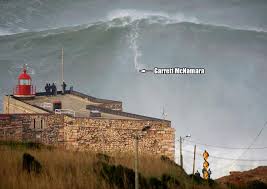
Some tsunami’s have reached the height of 100 feet(30 metres), that’s pretty cool, but the average height is about 30 feet (9 metres), that’s pretty tall!
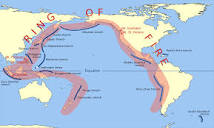
About 80% of Tsunamis happen in the Pacific Ring Of Fire and New Zealand is spot on the ring of fire.
In 2004, the Indian Ocean tsunami was caused by an earthquake with the energy of 23,000 atomic bombs. After the earthquake, killer waves radiating from the epicenter slammed into the coastline of 11 countries. The final death toll was 283,000! That’s a lot of people who died..Not really happy is it?
Hawaii is always at great risk for a tsunami – they get about 1 per year and a severe one every 7 years. The biggest tsunami that occurred Hawaii happened in 1946, the coast of Hilo Island was hit with 30 ft waves at 500 mph.
And last of all, one of the most interesting facts, Tsunami is the japanese word for Harbor wave as the tsunami only becomes visible when it’s close to shore, unless you are a bird, of course.

So, what have we learnt? The warning signs, causes and the damage.So tsunami’s are tidal waves, caused by other natural disasters which lead to this one, they can harm things and people, emotionally and enviromentally, tsunami’s destroy.. Well, everything. This was interesting for me to learn, I hope it was for you too, reader.


Austen's Tsunami information report


What is a Tsunami?
A Tsunami (Su-na-mee) is a Japanese word for Harbour wave. It can cause a lot of damage when it hits the coast. A Tsunami Is very tall and can travel really fast. When a tsunami hits it can cause billions of dollars in damage and can take years to grow the trees and build the the buildings again.
How is a Tsunami caused?
Tsunamis are normally caused by Underwater volcanic eruptions, Landslides and Earthquakes. When an earthquake occurs the tide retreats and the water rushes in creating energy.  Then the energy makes the water rise above the natural sea level. After that gravity pulls it down which makes it ripple outwards. When a Tsunami is formed by a volcanic eruption which Creates energy and The process is repeated. When the water is rippled it travels towards the coast at speeds of 500 Miles per hour or 700 kilometers per hour.
What happens when a tsunami travels?
When a tsunami is far out to sea it is very difficult to recognize since it moves through the depth of the water. When the wave gets closer to shore an event called wave schooling occurs, the wave still has a lot of energy and nowhere to go so it rises. The wave speed slows down while its height rises to as much as  100 feet.
What is the damage it does?
When a tsunami hits everything in its path is is crushed, broken or washed out to sea. It may flood for 300 meters or more, from the beach. The land is covered in rubbish and dead bodies. Food water and housing are destroyed. Tsunamis do not just drown people near the coast, but level buildings and trees for a mile or more, especially in low-line areas. If that is not enough the water then retreats back, taking back the newly created debris and anything or anyone caught in its way.
What happens after it has hit?
After the tsunami the Survivors have the big task of cleaning up the damage. There is often a lot of dead people so the first job they have to do is bury the dead. Next, they have to find clean water supplies. The water they have has been contaminated by the sea water. New wells will have to be dug or A place to store water from other places. Food is needed too, the Vegetable gardens and animals have suffered like the people. They also need to set up their own shelters, the survivors use anything handy to build them. Scraps of building materials or pieces of salvage can be used.
Who deals with their injuries?
One of the first thing people of aid have to do is provide fresh water. Tents are set up for the Sick and injured and the aid people deal; with their wounds. Their wounds could be from Broken bones, Cuts, bruises or sprained Joints. They have big bag of medical supplies.
How can we avoid a Tsunami?
Scientists and Policymakers are focusing in detecting the tsunami. Measuring underwater pressure and seismic activity. Also they are  establishing many global networks worldwide for quickly distributing alarms and warnings. When you hear the tsunami warnings go inland,  high ground or around it. When nature is too powerful to stop the safest course is to get out of its way.
How have people tried to stop it?
Some people have tried to Make the damage smaller or even stop a tsunami by creating Seawalls, flood gates and channels to divert the water. But these strategies are sometimes not effective
Do you know about dangerous tsunamis?
In 2004 there was a tsunami in the Indian ocean, it was one of the most deadliest tsunamis in history. Killing 200,00 throughout south-Asia. It spread across lots of  countries including Thailand, South Africa, Kenya, Singapore, Malaysia, India, Madagascar, Somalia, Bangladesh and Myanmar  In 2011 a tsunami in japan broke the flood-wall protecting its Fukushima power plant. Causing it to erupt in flames, And cut all the power in the city On December 28, 1908, a tsunami Hit the coast of Italy. It hit only a few minutes after shaking. The 12 meter tsunami destroyed near by coastal areas destroying almost all the structures and killing 70,000 People. The tsunami was caused by an undersea landslide. In total 150,000 People lost their lives.

Christian's tsunami work


Screenshot 2016-08-02 at 12.44.14.png                                                    Screenshot 2016-07-28 at 12.44.12.png


The word Tsunami originates from Japanese and means " harbour wave".

A tsunami is most frequently caused by an earthquake on the seafloor. However, coastal landslides and volcanic eruptions can also cause tsunamis. Normal ocean waves are caused by the wind and tides so are different to tsunamis.

A tsunami is a series of powerful waves that can travel up to  500 miles an hour while in deep ocean water and are quite small. However, when they reach shallow water near the coastline they  increase  in size, but slow down. A tsunami can reach up to 20 metres.

People in the path of a tsunami can be warned in various ways. The tide may go out very quickly, sirens may be used,  and warnings provided by tsunami or hazard watchers.seismograph detects undersea earthquakes.

when the sea level rises that is when you can tell a large amount of water has been displaced.The result can ruin crops. cattle even buildings can be knocked down from the force human beings lives are lost  or they are very injured.from the water flooding over the land from the energy pushing the water up .

The Deadly Tsunami By:Cooper


The Japanese word for a "harbour wave" also known as a tsunami. The very deadly disaster that has taken out lives in many areas. The famous tsunami has been in movies and on TV. It is a criminal that can't be caught.


What are the causes
The causes of the deadly tsunami are usually caused by the tectonic plates of the earth in the ocean pushing up against each other. Eventually one of the tectonic plates of earth give up. One of the plates rise whilst the other stays at the normal level. The sea level will rise from the normal sea level.
When the sea level rises from it's normal sea level it will start to form a big wave. The wave will start getting bigger as it gets closer to the shore. That will make the tsunami. Another reason for a tsunami to form is because of a meteorite. When the meteorite hits the water the pressure of it turns it into a big wave. Like when you punch the water in the ocean it makes a little wave. It is depending on the size of the item hitting the ocean or water. The bigger the object the bigger the splash, and, the smaller the object the smaller the splash. It also is depending on the weight of the object. The meteorite is a less suspected because it hasn't happened much in areas.Image result for tsunami gif animation

       What can tsunamis do

The deadly harbour wave has happened in many countries such as Japan. In Japan the tsunami had taken away more than 10, 000 people's lives and they say that 1500 people are still missing.(NZ Herald, John Armstrong) The deadly wave had also happened on islands like Samoa. In Samoa the tsunami took away 190 lives.

How can we prepare for this

To know when a tsunami is coming is very simple if you look for these signs.
One of the signs to look for is if there water goes out very fast or it might come in very fast. Another way to know when is when the warning buoys alarm the people or you can check on the radio or tv. Sometimes if a tsunami or natural disaster is coming the animals will start acting very strange. If you see a meteorite coming close to earth you should start moving. It is best to get canned foods for any natural disaster. To get away from a tsunami go to the highest ground and warn everyone else.

By: Cooper

Isaac- Tsunami, What is it?

I would like to share a piece of literature based around tsunamis and what they do, enjoy!


A Tsunami
What is a tsunami? Well a tsunami is a immense wave of water that is caused by natural disasters most commonly based underwater, these disasters being: Underwater mudslides, volcanoes and earthquakes. Most commonly caused by tectonic plates underground. All these natural phenomenons release energy, and that energy causes the giant walls of water we see today that devastate the world all too often.

Mistakenly, tsunamis are called tidal waves when actually they have nothing in common with the tides themselves, as I explained above a tsunamis caused by a large released amounts of energy through the water and are not affected by the tides. As the energy travels the water follows with it, and when the water hits the shallow area of the coastal beach, the tides starts receding rapidly and the affected water starts to slow down and rise higher and higher until gradually a tsunami is formed, but by then it's already too late.

A tsunami's damage to a country's economy and financial state is incredible, the costs of repair usually ranking up
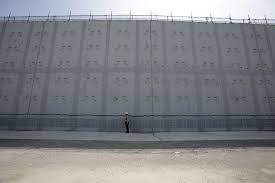
to millions of dollars. Not including the leftover debris and the hundreds or even thousands of people who died in the disaster. After a tsunami coastal communities are hellholes of destruction, many of their inhabitants dead or mentally scarred by the event. Some of these communities have tried building large concrete or steel walls, but even these towering protective slabs of brick and mortar fail to protect these beachside villages or even cities and still these devastating walls of water power through, destroying everything in their path.


All in all, a tsunami is a destructive force of nature that adds onto the large amount of possible natural disasters, ranging from sinkholes to tornadoes and volcanoes. And when a tsunami does occur, remember to always move to the highest point in your area whether it be a mountain or building if the tides start to drag out at a faster than usual pace, most of the time many people don't notice it as it travels through the water until it hits the beach. Nowadays scientists check tsunami buoys regularly so that when one does happen, not that it does happen frequently of course. That civilians have enough time to evacuate the area to high ground.

Now that we have covered everything everything about a tsunami, the damage it does, how it's formed, the warnings you can see to avoid it and extra facts. Many tsunamis have played a big part in historic battles and happenings, and maybe even in a few years, a century even. People may find a buried city that was lost in time by a tsunami. Well that's  all folks!


Georgia's Tsunami Writing

Lately Mrs Parker's literacy group have been learning about tsunamis. Now we've gathered all the information that we've learnt and we have all made a piece of writing about them. Here's mine and I hope you enjoy it and learn a thing or two about tsunamis.


The cause and impact of tsunamis
There have been many tsunamis and people may wonder what causes them and what are the warning signs , who it effects and which country or city has the most tsunamis also how it happens and how to be prepared.

What Causes Tsunami?
Many thing can cause tsunami but the main ones are underwater volcanic eruptions , underwater earthquake , when tectonic plates move  and rub together , a landslide , storm surges , nuclear explosions  also a meteorite strike but that doesn't happen often. Some  scientist think that some tsunamis have something to do with the ring of fire , the ring of fire is a kind of half circle area where there are a lot of volcanos and also were a lot of earthquakes happen. This is because it follows a line around the pacific ocean where the tectonic plates meet.Image result for the ring of fire

What Is A Tsunami?
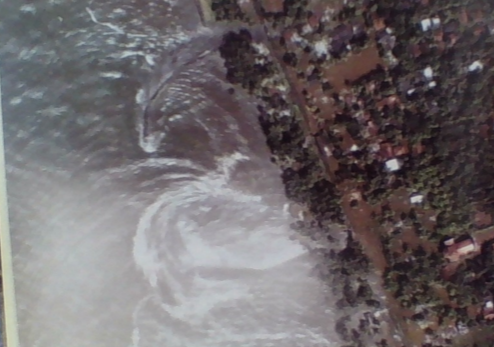
A tsunami is a colossal wave that is caused by many things it is like a wave of destruction. When it is in deep water its only little but when it is in shallow it can get really really big then when it folds over and hits the ground it destroys and floods the town/city. Also tsunami is a Japanese word meaning harbor wave.Image result for 100 feet tsunami real picturesScreenshot 2016-08-08 at 12.18.10 PM.png

The signs of a tsunamiScreenshot 2016-08-08 at 12.09.46 PM.png
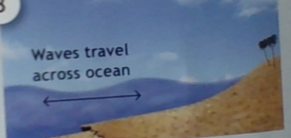
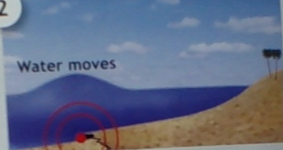
 There are many signs of when a tsunami is coming these are the common signs. One of the signs is ripples in the ocean , also the tide goes back really really far back , the water moves and the waves travel across the ocean. There are also sirens that go off and warning buoys. Warning buoys are things in the water and they detect movement in the water and see if a tsunami is coming and when one is about to come they send a signal to a satellite and then the satellite sends it to a special computer and then the people who have the special computer warn people and tell them to get somewhere high.Image result for signs of tsunamiScreenshot 2016-08-08 at 12.18.02 PM.png

What to do when a tsunami coming
One of the first things to do when a tsunami is coming get as far as away from it as possible then get somewhere really high. Also call for help and listen. You can also get prepared before there is a tsunami like don't move where there are active volcanoes that are near the water and there also might be signs that your area/street or other is prone to tsunamis.

Image result for japan's tsunami wall
How it effects the city's/community
When a tsunami hits it eradicate everything that's in its way and when the tsunamis over it leaves a trail of destroyed buildings. When tsunamis hit it also uses up alot of money to rebuild. Japan tried to build a huge concrete wall to stop tsunamis from coming over and destroying their community because they get alot of tsunamis there and they're sick of rebuilding. But a tsunami was taller than the wall and smashed the wall and destroyed it again.

Conclusion    
Tsunamis are really dangerous and cause alot of damage to their communities. There are alot of things that cause tsunamis and their are signs of tsunamis to. If you think you're in a tsunami use my information to help you.

By Georgia Couch